Liquid Screed vs Sand and Cement: Which Suits a Somerset Home?
Liquid screed or traditional sand and cement? A plain guide for Somerset and Dorset homeowners and builders: how each works and what to ask before you book.

If you are planning an extension, a renovation or a self-build in Somerset or Dorset, sooner or later your builder or heating installer will ask what kind of floor screed you want. Most people have never had to choose one before. This guide explains the two main options in plain terms, where each one makes sense, and what to ask before you book.
What a screed is, and what it is not
A screed is the layer laid over the structural floor, and usually over the floor insulation, to give a smooth, level surface for the final floor finish.
It is neither the structural floor nor the surface you live on. It sits between the two. Where there is underfloor heating, the screed has a second job: it surrounds the heating pipes and spreads their warmth evenly across the room.
Traditional sand and cement screed
Traditional screed is a semi-dry mix of sand and cement. Semi-dry means it contains only enough water to hold together, so it has the texture of damp sand rather than a wet mix. It is brought into the room, spread out, compacted and levelled by hand with a straight edge and a trowel.
It is a long-established method that most builders know well, and it still has its place:
- Small or awkward areas where setting up a pump is not practical.
- Floors that need falls. A fall is a deliberate slope, for example towards a drain in a wet room. A semi-dry mix can be shaped to a slope, and a liquid one cannot.
Its limits are mostly practical. It is labour-intensive, so larger floors take longer to lay. Around underfloor heating pipes it has to be compacted thoroughly, because poor compaction can leave gaps next to the pipes. And it is generally laid thicker than liquid screed, which adds height and weight to the floor.
Liquid screed
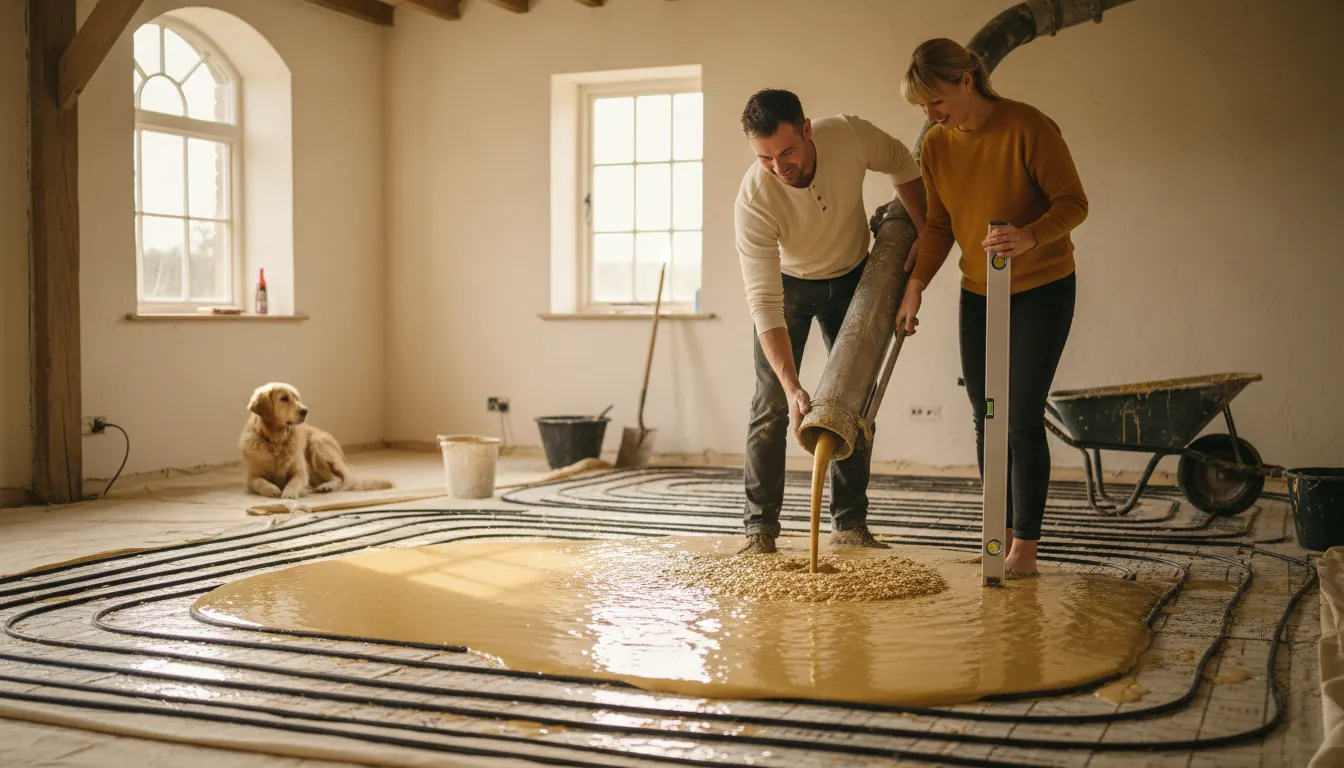
Liquid screed, sometimes called flowing screed, is pumped into the room through a hose as a fluid. The screed then flows across the floor and finds its own level, and the installer works over the surface with a dappling bar, a tool that releases trapped air and helps the screed settle evenly.
The main advantages are:
- A consistently level finish. Because the material flows, it gives a flat surface across a whole room or a whole ground floor, which helps whoever lays the floor finish afterwards.
- Full contact with underfloor heating. Liquid screed fully surrounds the pipes without leaving air pockets, so heat passes into the floor evenly.
- A thinner layer. Liquid screed is typically laid thinner than traditional screed. With underfloor heating, that means the floor responds more quickly when the heating comes on.
- Speed on the day. Pumping is much quicker than laying by hand, so the pour itself takes up little of the build programme.
What liquid screed asks of you
Liquid screed comes with requirements that are worth knowing early.
The floor has to be watertight first. Because the screed is liquid, it will run into any gap it can find. Before the pour, a membrane (usually a polythene sheet) is laid over the insulation with the joints lapped and taped, and a foam edging strip is fitted around the perimeter of the room. The insulation boards underneath need to sit flat and tight together.
The building should be weathertight. The roof should be on and the openings closed or covered, so that rain, frost and strong draughts cannot get at the fresh screed.
There has to be access. The delivery and the pump need to get reasonably close to the building, with a clear route for the hose.
It needs time to dry. After the pour, the screed needs ventilation and time. How long depends on the depth of the screed and the conditions on site. Floor finishes should only go down once a moisture test confirms the screed is dry.
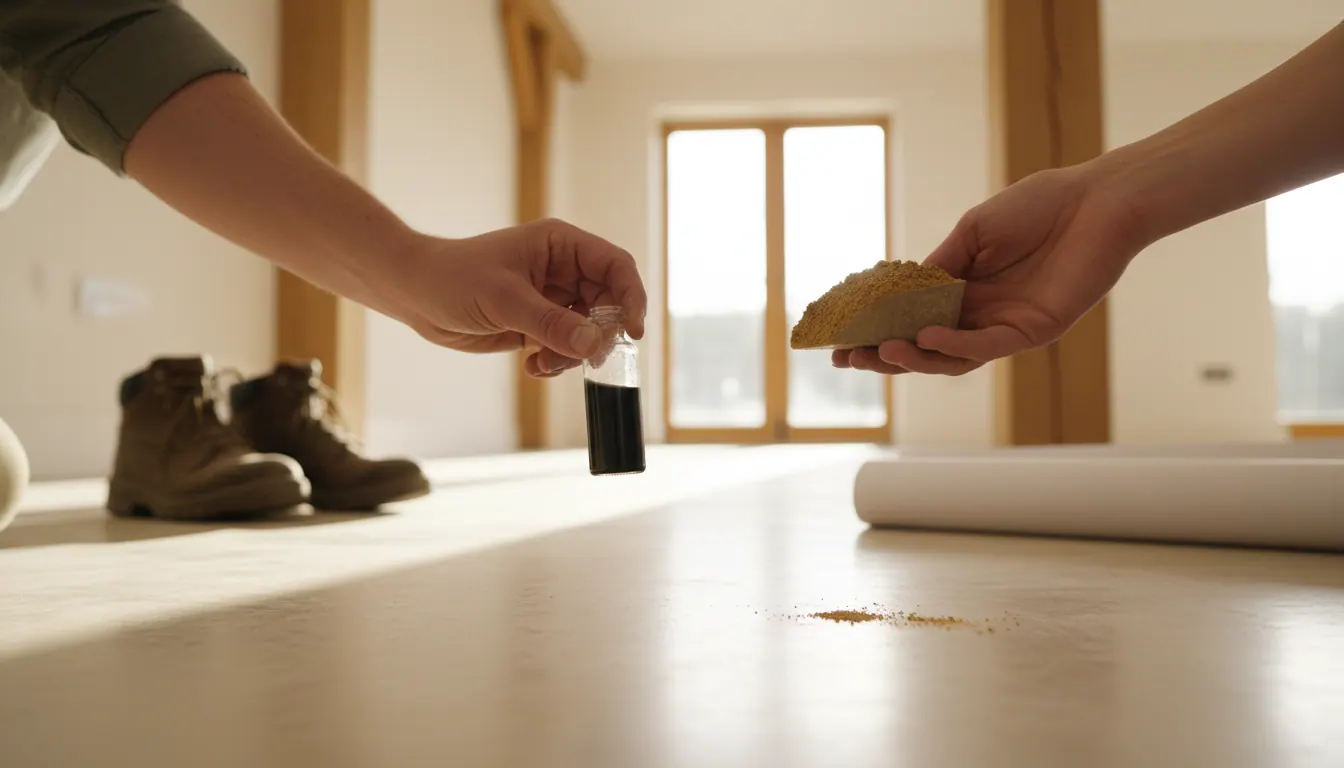
The surface may need preparing. Some liquid screeds leave a thin surface layer that has to be removed before floor finishes are laid. Ask your installer whether that applies to your floor and who will do it.
Which one suits your project
A few questions usually settle it. They apply whether the floor is a single-room extension in Taunton or a whole ground floor in Yeovil.
- Is there underfloor heating? If so, liquid screed is generally the better match.
- How big is the floor? The larger the area, the more the speed and consistency of a pumped screed count in its favour.
- How much floor height is there? If you are working to existing door thresholds or stairs, a thinner screed may make the floor build-up easier to fit.
- Does the floor need to slope? If it does, that area needs a traditional screed.
Where we fit in
Somerset Screed Company are liquid screed specialists. We supply and install liquid screed for domestic, new build and commercial projects, including extensions, renovations, underfloor heating screeds and uneven floors that need a level finish.
We do not offer sand and cement screeding, so if part of your job needs a traditional screed, that is one to arrange through your builder.
What to ask before you book
Whoever you use, these questions are worth asking:
- What has to be in place on the floor before the day of the pour, and who is responsible for it?
- What depth of screed suits my floor build-up and my heating system?
- How soon can the floor be walked on, and how will we know when it is dry enough for floor finishes?
- Does the surface need any preparation before the floor finish goes down?
We work across Somerset, Dorset and the surrounding areas, and builders and trade enquiries are welcome. Message us with your floor area and location for a free quotation.
“2 days ago 2d Really happy with the work. The finish was spot on and you can tell a lot of care and attention went into getting everything right. Turned up when he said he would, worked hard and left everything tidy afterwards. Would definitely recommend to anyone looking for a reliable and professi…”